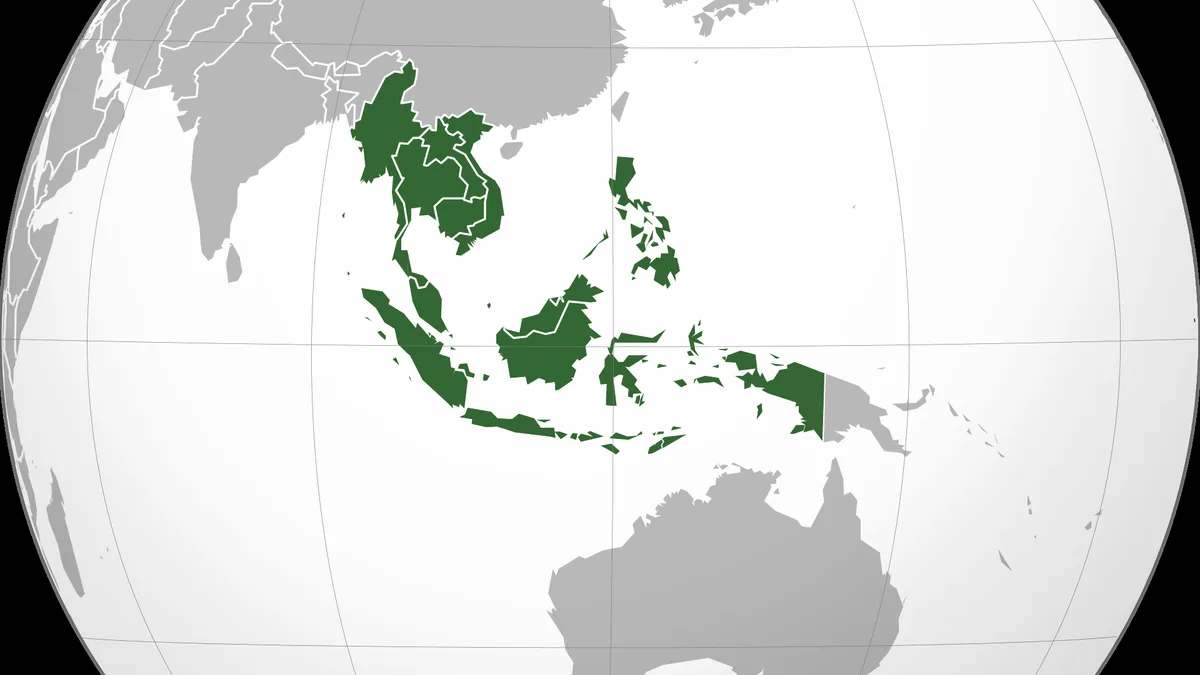
Southeast Asia
| City market | Real estate |
|---|---|
| Yield | Medium to high |
| Foreign buyer eligibility | Varies by property type and location |
| Property types | Condominiums, landed houses, commercial buildings |
| Ownership restrictions | Foreigners may own condominiums with quota limits |
| Common purchase process | Requires legal counsel and due diligence |
| Market maturity | Developed |
Origin and history
Southeast Asia is not a city but a distinct geographical and cultural region of the Asian continent. The term itself originates from Western geopolitical and academic discourse, gaining formal prominence in the mid-20th century during the Second World War. Its conceptual boundaries were solidified with the establishment of the Association of Southeast Asian Nations (ASEAN) in the 1960s. The region comprises the continental area known as Indochina and the archipelagic and peninsular nations of the Maritime Southeast Asia. Its history spans millennia, featuring influential empires like the Khmer, Srivijaya, and Majapahit, followed by extensive periods of European colonial rule from the 16th century onward. The modern nation-states within Southeast Asia emerged largely in the mid-20th century following waves of decolonization and conflict.
What it is for
Southeast Asia serves as a collective designation for a region of profound geopolitical, economic, and cultural significance. Its primary function is to provide a coherent framework for intergovernmental cooperation, notably through ASEAN, which facilitates diplomacy, trade, and regional stability. The region functions as a major global hub for manufacturing, electronics assembly, and agricultural exports such as rubber, palm oil, and rice. It is a critical crossroads for global maritime trade, with strategic waterways like the Strait of Malacca. Culturally, it preserves and evolves diverse traditions, languages, and religious practices. Furthermore, its natural environments, from rainforests to coastlines, play vital roles in global ecology and biodiversity.
Overview
Southeast Asia encompasses eleven countries: Brunei, Cambodia, East Timor, Indonesia, Laos, Malaysia, Myanmar, the Philippines, Singapore, Thailand, and Vietnam. It is characterized by extraordinary diversity in ethnicity, language, religion, and political systems, ranging from constitutional monarchies to socialist republics and authoritarian states. Economically, the region displays a wide spectrum, from the high-income city-state of Singapore to developing economies like Laos and Myanmar. Urban centers such as Bangkok, Jakarta, Ho Chi Minh City, and Kuala Lumpur are massive, dynamic hubs of commerce and culture. The region's climate is predominantly tropical, with monsoonal patterns shaping agriculture and life. Demographic trends show a generally young and growing population, driving both economic potential and urban challenges.
What to know
For any market activity, one must understand that regulations are strictly national and often sector-specific, as there is no unified "Southeast Asian" property or investment law. Foreign ownership rights vary dramatically; for instance, Singapore allows relatively free foreign purchase of private property, while Thailand and the Philippines impose significant restrictions on land ownership. Indonesia and Vietnam permit leasehold interests for foreigners in certain property types, often with long lease terms. Due diligence is paramount, as transparency and legal enforcement can be inconsistent, and title disputes are not uncommon in some jurisdictions. Cultural and business norms differ significantly between Theravada Buddhist mainland societies and the more Islamic-influenced parts of the archipelago. Engaging a reputable local legal advisor is not merely recommended but essential for any transaction.
Common questions
A primary question is whether a foreigner can buy freehold property, to which the answer is typically "no" for land in most countries, with Singapore and Malaysia (under specific programs) being notable exceptions. Another frequent inquiry concerns the stability of investments, given political volatility in some nations; while certain markets have demonstrated strong growth, others carry higher political and currency risk. Potential investors often ask about the best markets for yield, with major cities like Bangkok, Manila, and Ho Chi Minh City historically offering strong rental yields for condominiums, though oversupply can depress prices. Questions regarding financing reveal that mortgages for foreigners are difficult to obtain outside of Singapore and select Thai banks, often requiring high down payments. Many inquire about the impact of economic integration via ASEAN, which facilitates trade in goods but has not harmonized real estate law. Lastly, questions about taxation are universal, as each country has its own complex system of transfer taxes, stamp duties, capital gains taxes, and annual property taxes.
Pros and cons
A significant pro is the high growth potential in developing urban centers, where demographic trends and rising middle classes can drive substantial capital appreciation and rental demand. Market entry costs can be relatively low compared to major global cities, particularly for leasehold condominium units. Conversely, a major con is the legal complexity and risk; foreigners often navigate opaque systems where local partners may be legally required, creating principal-agent problems and vulnerability to fraud. Currency fluctuation risk is substantial, as local currencies can be volatile against the dollar or euro, potentially eroding returns. Regulatory change is a constant risk, as governments may suddenly alter foreign ownership rules, lease terms, or tax structures, directly impacting asset value. Common mistakes include underestimating the illiquidity of assets in secondary markets and over-relying on developer promises about future infrastructure or capital gains. Those who regret purchasing are often individuals who bought based on tourism experience without understanding local tenancy laws, maintenance challenges, or the real difficulty of managing an asset remotely.
Who it suits
This market primarily suits sophisticated, patient investors with a high risk tolerance and a long-term horizon who are comfortable navigating complex legal environments. It is suitable for institutional funds or high-net-worth individuals with diversified global portfolios seeking geographic exposure to high-growth emerging markets. It may also suit expatriates or retirees with deep, long-term ties to a specific country who seek a residence and understand the local context intimately. It is less suited to passive investors seeking a simple, hands-off income stream or those requiring stable, predictable returns and high liquidity. First-time foreign real estate buyers are generally ill-advised to enter these markets without extensive local guidance and realistic expectations of the challenges involved.
Latest Southeast Asia news
Latest reporting
Greystar Names Tom Livelli Asia Pacific Head Amid Portfolio
US multifamily giant Greystar has appointed former EQT partner Tom Livelli as executive director and head of Asia Pacific, tasking him with leading...

Mirvac Names Kit Georgeos as Funds Management CEO
Mirvac has appointed Kit Georgeos as chief executive of its funds management division, effective 6 October. The move headlines a series of executive...

CapitaLand Targets $500M for Third Asia Pacific Credit Fund
CapitaLand Investment is seeking $500 million for its third Asia Pacific credit fund, focusing on senior secured, asset-backed real estate...
Mapletree Raises $500M for Asia Logistics Fund
Singapore's Mapletree Investments has secured over $500 million in equity for a new logistics development strategy targeting $2.1 billion in assets...

Blackstone Sells $1.3B Stake in India REIT
Blackstone is selling up to $1.25 billion in units of India's Knowledge Realty Trust, reducing its stake. Other Asia-Pacific headlines include ARA...

Mingtiandi-Yardi Survey Tracks AI Uptake in APAC Real Estate
Mingtiandi and Yardi’s sixth-edition survey, due 28 Aug, gathers data from over 16,000 subscribers on AI adoption, barriers and future expectations...