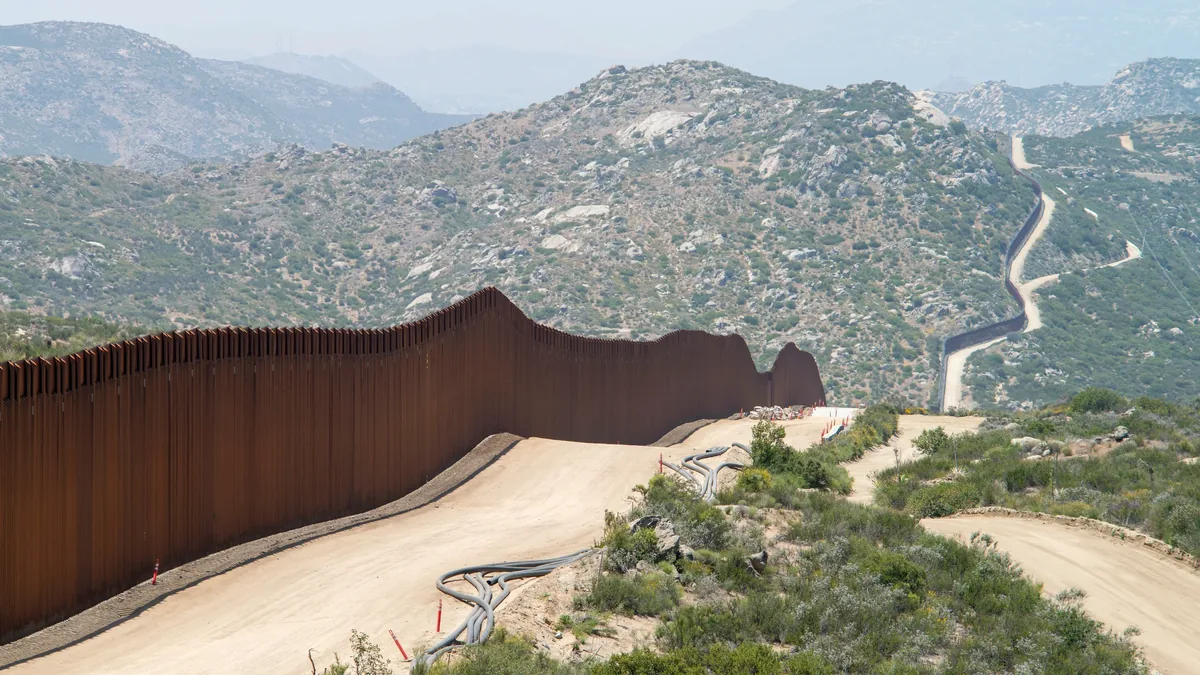
Agricultural, Coastal And Border Land Restrictions
| Market type | Agricultural, coastal and border land restrictions |
|---|---|
| Primary yield | Varies by local zoning and crop type |
| Foreign purchase allowed | Subject to national security and agricultural land laws |
| Common restrictions | Ownership caps, usage covenants, government approval required |
| Typical transaction | Leasehold or usufruct agreements more common than freehold |
| Governing framework | National strategic land reserve legislation |
| Documentation required | Proof of agricultural intent, investment plan, background checks |
Origin and history
Agricultural, Coastal And Border Land Restrictions are a set of legal provisions originating in Mexico. These restrictions were formally established in the Mexican Constitution of 1917, following the Mexican Revolution. The framework was further elaborated and codified into federal law throughout the mid-20th century. The laws specifically govern the ownership and use of land categorized as *ejidal*, coastal, and within a designated border zone. Their creation was a direct response to historical land concentration and foreign exploitation during the Porfiriato period. The legal architecture is designed to maintain national sovereignty over strategic territories and protect communal land rights for Mexican citizens.
What it is for
The primary purpose is to prohibit the private ownership of certain land types by foreigners and, in some cases, by Mexican corporations with foreign capital participation. These laws aim to protect national security by restricting foreign control over sensitive border and coastal regions. A core function is to preserve agricultural land, particularly *ejido* parcels, for the benefit of the local campesino communities and national food security. The restrictions prevent the speculative sale and conversion of communal lands that are vital for subsistence farming. They also serve to manage and control development within the federal maritime-terrestrial zone to protect public access and ecological balance. The legal framework mandates the use of specific fiduciary trusts, known as *fideicomisos*, for foreign acquisition in restricted zones as a controlled alternative to direct ownership.
Overview
The restrictions apply to three specific geographic and legal categories of land within Mexico. The first is the "Restricted Zone," which encompasses all land within 100 kilometers of any international border and 50 kilometers of any coastline. The second category is agricultural land classified under the *ejido* system, which is communal property granted to rural communities. The third involves the federal maritime-terrestrial zone, which is inherently inalienable public property. Foreign individuals or entities cannot hold direct title to property in these areas, with narrow exceptions for residential purposes via a bank trust. For agricultural land outside the Restricted Zone, foreign investment may be permitted but is subject to scrutiny and caps on total area owned. The laws are administered by the Ministry of Foreign Affairs and the National Agrarian Registry, among other agencies.
What to know
A foreigner cannot directly hold title to real estate within the Restricted Zone or on *ejido* land. The standard legal mechanism for residential property in the Restricted Zone is a renewable 50-year bank trust (*fideicomiso*), where the bank holds the title for the foreign beneficiary. Purchasing *ejido* land is a complex process that requires the formal dissolution of the *ejido* status and its conversion to private property, which necessitates community consent and government approval. Foreign investment in agricultural land outside the Restricted Zone is limited by law to a maximum area, which cannot exceed the equivalent of small property as defined by state law. Due diligence is critical, as fraudulent sales of *ejido* land without proper regularization are common and result in the buyer having no legal title. Engaging a reputable Mexican attorney specializing in real estate and agrarian law is an absolute necessity before any transaction.
Common questions
Can a foreigner own a home in Mexican coastal cities like Cancun or Puerto Vallarta? Yes, but only through a bank trust (*fideicomiso*) established with a Mexican financial institution. What is the difference between *ejido* land and private property? *Ejido* land is communal property governed by an assembly of *ejidatarios*, while private property is held under individual title registered with the public property registry. Is it possible to convert *ejido* land into private property that a foreigner can buy? It is legally possible through a government-supervised process called *domesticación*, but it is lengthy, requires full community agreement, and is not guaranteed. Does the 50-year trust mean I lose my property after that term? No, the trust is renewable, and the beneficiary rights can be sold or inherited during its term. Are there any areas in Mexico where foreigners can hold direct title? Yes, foreigners can hold direct title to residential property located outside the Restricted Zone and not on *ejido* or other restricted land types. What are the risks of buying property without verifying its status? The risks include eviction, total loss of investment, and legal proceedings, as the sale may be deemed null and void.
Pros and cons
A significant pro is that the system effectively preserves national control over strategically sensitive areas, preventing foreign enclaves or security concerns. The *ejido* system, underpinned by these restrictions, provides a degree of social stability and land access for rural communities. For foreign buyers using the trust system, it offers a secure, legally recognized method to enjoy property in prime coastal locations. A major con is the complexity and opacity of the laws, which create a high barrier to entry and necessitate expensive professional legal guidance. A common mistake is buyers proceeding with a purchase based on a seemingly clear title, only to later discover an unresolved *ejido* claim, leading to protracted and costly litigation. Many individuals regret purchasing property after relying on informal assurances from a seller or developer without independent, thorough due diligence on the land's legal history and status.
Who it suits
This legal framework suits Mexican nationals and domiciled foreign residents who have the legal capacity to navigate or be exempt from the restrictions. It suits foreign investors who are patient, well-capitalized for legal fees, and who strictly utilize the bank trust mechanism for residential purposes in the Restricted Zone. The system suits developers and large agricultural enterprises that have the resources and expertise to structure investments compliantly, often through Mexican corporate entities with permitted capital structures. It does not suit foreigners seeking simple, fee-simple ownership of large tracts of coastal or border land for private use or development. It is ill-suited for speculative buyers or those unwilling to engage deeply with Mexican legal procedures. Ultimately, it best serves those who respect the historical and sovereign intent of the laws and proceed with caution and expert guidance.
Latest Agricultural, Coastal And Border Land Restrictions news
Latest reporting
URA Launches Two GLS Sites in East Coast Road and Serangoon
The Urban Redevelopment Authority has launched two residential Government Land Sales sites, offering a combined potential yield of 320 private homes.

Mingtiandi Forum Draws 166 Execs to Sydney for Australia
The inaugural Mingtiandi Australia Forum in Sydney gathered 166 senior executives to discuss cross-border investment strategies.

Data Centre Boom Could Double Australian Industrial Rents
JLL reports Australia's A$155 billion data centre pipeline is intensifying competition for industrial land, with modelling showing warehouse rents in
Eureka Group to Acquire NSW Land Lease Assets from Ingenia
Australian senior housing provider Eureka Group has agreed to buy six retirement properties in New South Wales from Ingenia Communities Group for...

Hongkong Land Targets $1 Billion in Tokyo Property Deals
Hongkong Land is negotiating over $1 billion in Tokyo mixed-use property acquisitions, while IOI Properties finalizes a $2 billion Singapore office

Henderson Land profit jumps 41% on HK recovery
Henderson Land Development reported a HK$4.09 billion net profit, a 41 percent annual increase for the first half of 2026, driven by strong Hong Kong...