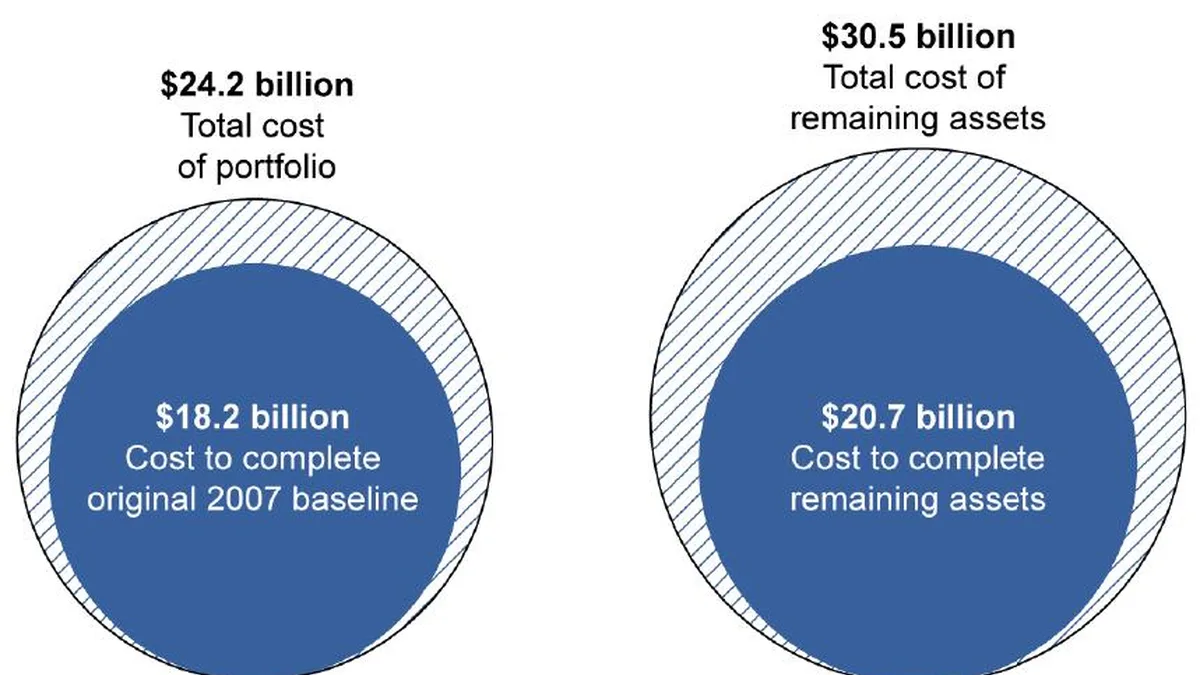
Total Cost Of Acquisition
| Country of origin | United States |
|---|---|
| First created | 2010s |
| Original use | A metric in real estate investment analysis |
| Market type | Secondary or tertiary (varies) |
| Yield range | Low to moderate (varies) |
| Foreign buyer eligibility | Typically permitted (varies) |
Origin and history
The concept of Total Cost of Acquisition (TCA) originated within corporate finance and strategic sourcing disciplines in the United States during the late 20th century. Its formalization is closely tied to the evolution of supply chain management and activity-based costing methodologies that gained prominence in the 1980s and 1990s. The framework was developed as a response to the recognition that the initial purchase price of an asset or service is often a misleading indicator of its true financial impact. Businesses needed a more comprehensive accounting tool to evaluate long-term investments and vendor contracts beyond simple capital expenditure. This analytical approach spread from manufacturing and heavy industry into broader corporate and eventually real estate investment practices. Its adoption marked a shift from simplistic cost comparison to a holistic view of value and lifetime expense.
What it is for
Total Cost of Acquisition is used to calculate the complete financial outlay required to obtain, establish, and initially operate an asset before it generates sustainable returns. In a city real estate market context, it serves as a critical due diligence metric for investors to compare different property opportunities on a like-for-like basis. The figure is essential for accurate pro forma financial modeling and for determining the true initial equity requirement for an investment. It prevents the common error of undercapitalizing a project by revealing all upfront costs that are not reflected in the purchase price alone. For commercial assets, it is fundamental for assessing investment yield and payback periods. For residential buyers, it provides a realistic picture of the cash needed to complete a purchase and make the property functional.
Overview
In real estate, Total Cost of Acquisition aggregates all expenses incurred to secure legal ownership and achieve a rent-ready or operationally ready state. The core components universally include the purchase price, transfer taxes, legal and notary fees, and agent commissions. It further encompasses due diligence costs such as property surveys, environmental assessments, and technical building inspections. For investment properties, costs for initial renovations, essential repairs, and compliance upgrades to meet local rental codes are included. Financing costs, including loan origination fees, appraisal fees, and mortgage taxes, form a significant part of TCA for leveraged purchases. The final TCA figure becomes the true baseline cost basis for all subsequent calculations of return on investment, depreciation, and capital gains.
What to know
A critical rule is that TCA is highly location-specific, as government fees, tax structures, and professional cost scales vary dramatically between cities and countries. Investors must confirm whether standard local transaction costs are typically borne by the buyer or the seller, as this directly alters the calculation. In many city markets, "stamp duty" or property transfer tax can add a substantial percentage to the base price, often on a progressive scale. For foreign buyers, additional layers of cost are common, including specialized legal advice on foreign ownership law, potential translation fees for documents, and international fund transfer charges. The timeline for completing a transaction can indirectly affect TCA through holding costs like interim financing if the process is protracted. Underestimating TCA is a primary cause of investment failure, as it erodes projected cash flow and can trigger liquidity crises shortly after purchase.
Common questions
How does TCA differ from the purchase price? The purchase price is merely one line item within TCA, which includes all other fees, taxes, and setup costs. Does TCA include future operating costs? No, TCA is strictly the upfront cost to acquire and make the asset operational; ongoing expenses like utilities, management, and maintenance are calculated separately. Are renovation costs always part of TCA? Only initial, mandatory renovations to secure occupancy or meet basic rental standards are included; discretionary upgrades for value-add are often analyzed as separate future capital expenditures. How is TCA used to calculate yield? The net operating income of the property in its first stabilized year is divided by the TCA to derive the entry capitalization rate. Do real estate agents provide accurate TCA estimates? While agents may offer a summary, investors must independently verify each cost component with lawyers, tax advisors, and local authorities. Can TCA be financed? Only certain elements, typically the purchase price and sometimes major renovations, can be included in a mortgage; many fees and taxes require immediate cash payment.
Pros and cons
A primary advantage of rigorously calculating TCA is that it forces disciplined due diligence and surfaces hidden costs before a binding commitment is made, allowing for accurate comparison between disparate investment opportunities. It provides a realistic foundation for investment models, protecting against over-leverage by showing the true equity injection required. The major con is that accurately estimating TCA is complex, time-consuming, and often requires engaging expensive local professionals before a deal is certain, representing a sunk cost on failed bids. Investors frequently regret neglecting TCA when local transaction taxes are unexpectedly high, rendering a deal's projected returns unviable after accounting for all costs. The most common mistake is relying on generic online calculators or anecdotal rules of thumb, which fail to capture property-specific due diligence and compliance costs, leading to significant budget overruns. Furthermore, in volatile city markets, TCA can increase unexpectedly if transaction timelines extend and financing costs rise.
Who it suits
This analytical framework is essential for institutional investors, real estate investment trusts, and serious private portfolio investors who require precise metrics for decision-making and asset allocation. It is particularly suited for cross-border investors, for whom unfamiliar local cost structures pose a significant financial risk that must be quantified in advance. Developers and value-add investors benefit from TCA analysis as it accurately sets the baseline cost for their project, against which all future value creation is measured. The methodology is less critical for domestic, cash-rich buyers purchasing a primary residence in a familiar market where cost overruns are manageable, though still advisable. It is a necessary tool for anyone utilizing leverage, as lenders will scrutinize the total capital stack and the borrower's equity contribution relative to the true project cost. Ultimately, TCA suits any purchaser for whom the investment's financial performance is a primary concern, rather than solely emotional or lifestyle drivers.
Latest Total Cost Of Acquisition news
Latest reporting
CapitaLand Ascendas REIT Completes $172M Buy
CapitaLand Ascendas REIT has completed the S$218.3 million acquisition of a Singapore logistics property, fully utilising its recent equity...

Anthropic seeks up to 5GW of data centre capacity in NSW
Anthropic is pursuing up to 5 gigawatts of AI data centre capacity in New South Wales, more than triple Australia's current total, according to...
Gaw Capital Partners, Petraville Team to Buy Seoul Office Tower
Gaw Capital Partners and Petraville Asset Management, backed by South Korea’s National Pension Service, completed the $211 million acquisition of...
JD.com, Sino Land win HK$16.8B Northern Metropolis project
JD.com, Sino Land and four mainland developers secured a 50-year development grant for an 11-hectare site in Hong Kong’s Northern Metropolis, with a...
Japanese Investor JDC Corp Backs Centuria's $320M Sydney Office Acquisition
Japanese construction and engineering group JDC Corp has invested in Centuria Capital Group's acquisition of a central Sydney office complex for...
Asia-Pacific Real Estate Roundup: Credit Inflows, Singapore Sales, and Key Transactions
Partners Group secures a $1 billion Asia credit mandate, Singapore's new home sales rebound, and key real estate deals across the region, including a...