Sydney
| Market type | Large global financial center |
|---|---|
| Foreign buyer eligibility | Restricted; non-residents generally require FIRB approval |
| Primary yield range | Approx. 3-4% for prime commercial assets |
| Major property sectors | Office, retail, industrial |
| Market transparency | High |
| Major governing body | Foreign Investment Review Board (FIRB) |
Overview
The Sydney property market refers to the residential and commercial real estate sector within the Greater Sydney region of New South Wales, Australia. It is characterized by high demand, limited land supply, and historically high price points relative to other Australian capitals. The market encompasses diverse property types, including detached houses, apartments, townhouses, and commercial assets across numerous suburbs and precincts. Its performance is a primary indicator of national economic health due to Sydney's status as Australia's largest and most globally connected city. Market yield, a key metric for investors, varies significantly by property type and location, with gross rental yields typically lower than in other Australian capitals due to high capital values. Foreign investment in the market is permitted but is subject to specific regulations and approval processes administered by the federal government.
History
European settlement in Sydney began in 1788 with the establishment of a British penal colony at Port Jackson, creating the initial demand for built structures. Land was initially granted by the Crown, but a formal property market began to develop in the early 19th century as free settlement increased. The Victorian gold rushes of the mid-19th century spurred rapid population growth and a corresponding property boom, establishing Sydney's enduring pattern of demand-driven price increases. The 20th century saw the market evolve through cycles of boom and bust, influenced by factors such as post-war immigration, financial deregulation in the 1980s, and the long-term trend of suburban expansion. The early 21st century witnessed a sustained period of price growth, significantly accelerating from the 2010s onward, driven by low interest rates, strong population growth, and constrained new supply. This historical trajectory has resulted in Sydney having the highest median property prices in Australia, a position it has held for decades.
How it works today
The Sydney property market operates through a system of private treaty sales and public auctions, with auctions being particularly dominant in sought-after suburban areas. Prices are determined by buyer competition, with real estate agents facilitating transactions between vendors and purchasers. Market data, including recent sales, median prices, and days on market, is aggregated and published by several core research bodies, providing transparency for participants. Ownership is governed by a Torrens title system, guaranteeing indefeasible title via registration with the New South Wales Land Registry Services. Foreign non-residents generally require approval from the Foreign Investment Review Board (FIRB) to purchase residential real estate and are typically restricted to new dwellings. Investment yields are calculated from rental income against property value, with gross yields for houses often below 3% in many suburbs, reflecting the high capital cost relative to income return.
Why it matters
The Sydney property market is a critical component of the Australian economy, with residential real estate constituting the largest store of household wealth nationally. Its performance directly impacts consumer confidence and spending, influencing broader economic activity and stability. Market dynamics affect housing affordability, which is a persistent social and political issue with implications for workforce mobility, inequality, and intergenerational wealth transfer. The construction sector, closely tied to the market, is a major employer and driver of economic growth, sensitive to shifts in buyer demand and developer feasibility. For international investors, the market represents a gateway to a stable political and economic system, though its regulatory environment requires careful navigation. Its trends are closely monitored by policymakers, as significant corrections can pose systemic risks to the financial system due to the banking sector's high exposure to residential mortgages.
Common misconceptions
A common misconception is that the Sydney market moves uniformly, when in reality it is a collection of distinct sub-markets that can perform very differently based on location, property type, and local economic factors. Many assume property prices only ever rise over the long term, ignoring historical cycles that have included periods of significant stagnation or decline in real terms. Another error is conflating high property prices with high rental yields, whereas Sydney typically offers lower gross yields than other capitals due to the premium placed on capital growth. Some foreigners believe purchasing property automatically grants them residency rights, which is false; property investment and immigration are entirely separate governmental processes. Investors often underestimate the total holding costs, including land tax, strata levies for apartments, and maintenance, which can erode net returns. Finally, media reports on "median prices" are sometimes misinterpreted as reflecting the value of all homes, rather than being a statistical midpoint that can be skewed by the mix of properties sold in a given period.
Latest Sydney news
Latest reporting
Stockland cancels Kogarah data centre amid community opposition
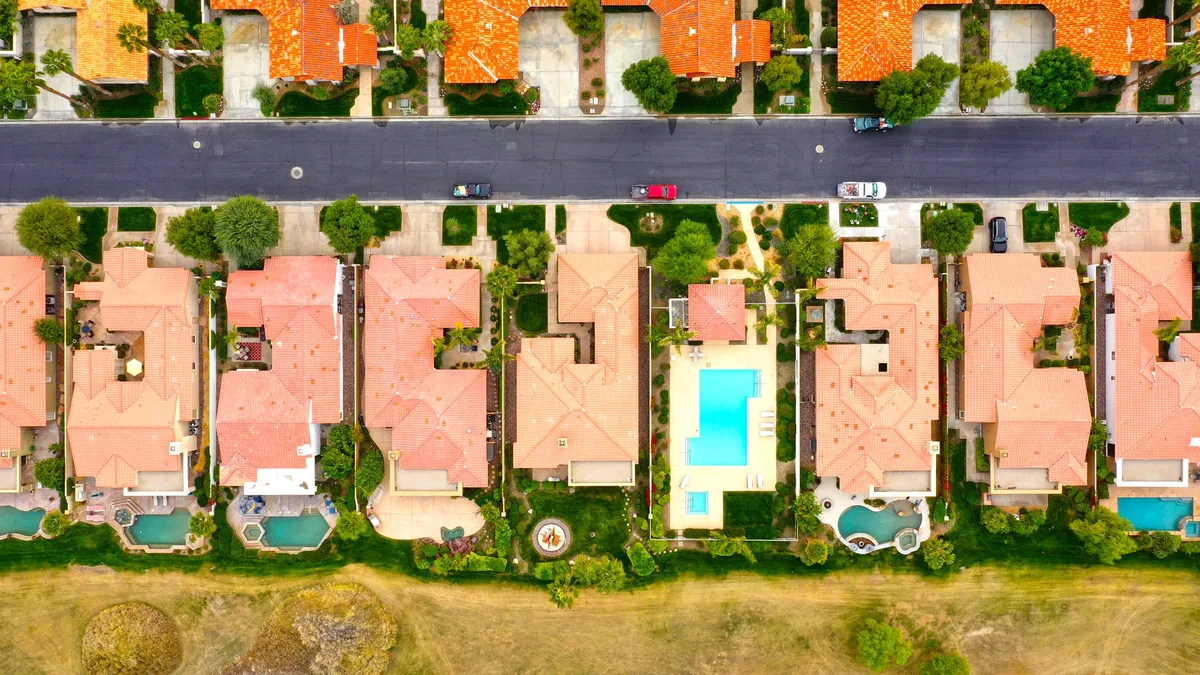
Stockland and John Boyd Properties have removed a proposed AI data centre from their $3.5 billion logistics precinct at the former Kogarah Golf Club...

AirTrunk Secures $3 Billion Green Loan for SYD3 Campus
AirTrunk has secured a A$4.25 billion green loan from a 32-bank consortium to fund its 400MW SYD3 data centre in Western Sydney, highlighting strong...
OUE REIT Acquires 69.9% Stake in Sydney's Salesforce Tower
OUE REIT is buying a half interest in Sydney's Salesforce Tower for A$864 million, raising its total stake to 69.9% in a major expansion into...

Australia Post Seeks Over A$320 Million for Sydney Industrial Assets
Australia Post is selling two major Sydney industrial properties via a sale-and-leaseback deal to raise over A$320 million, reflecting strong...

Mirvac pays A$394 million for 50% of Sydney's 5 Martin Place
Mirvac's Wholesale Office Fund acquired a half stake in the Sydney CBD tower from Cbus Property, valuing the asset at A$788 million on a 5.75% yield.

Mingtiandi Forum Draws 166 Execs to Sydney
The inaugural Mingtiandi Australia Forum in Sydney gathered 166 senior executives to discuss cross-border investment strategies.