Australia
| Market type | City market |
|---|---|
| Typical yield range | Medium |
| Foreign buyer eligibility | Yes, with FIRB approval |
| Common property types | Houses, apartments |
| Transaction process | Conveyancing |
| Governing body | Foreign Investment Review Board |
| Taxation | Stamp duty applies |
Overview
Australia is a sovereign country comprising the mainland of the Australian continent, the island of Tasmania, and numerous smaller islands. It is the world's sixth-largest country by total area and operates as a federal parliamentary constitutional monarchy. The Australian property market is characterized by significant regional variation, with major city markets like Sydney and Melbourne historically demonstrating high price growth and lower rental yields compared to smaller capital cities and regional areas. Foreign investment in Australian residential real estate is permitted but is subject to a regulatory framework administered by the Foreign Investment Review Board (FIRB), which generally requires foreign nationals to seek approval before purchase. Investment yields are typically measured as gross rental yield, calculated as annual rental income divided by property value, expressed as a percentage.
History
The continent now known as Australia was originally inhabited by Indigenous peoples for tens of thousands of years before European exploration. British settlement began in the late 18th century with the establishment of a penal colony at Port Jackson in 1788. The six separate British colonies federated to form the Commonwealth of Australia in 1901, establishing the modern nation-state. The development of its major urban property markets accelerated significantly in the post-World War II era, driven by population growth and suburban expansion. Foreign investment in Australian real estate became a prominent policy issue in the late 20th century, leading to the establishment of the modern FIRB regime. The historical preference for detached housing on individual lots has profoundly shaped the urban form and density of Australian cities.
How it works today
Today, the Australian property market is decentralized, with each state and territory maintaining its own land title system, transfer duties (stamp duty), and land taxes. Purchasing property involves legal conveyancing, and financing is predominantly provided by domestic banks and lenders. Foreign non-residents generally require FIRB approval to buy established dwellings and are usually restricted to purchasing new dwellings, with the aim of adding to the housing stock. Temporary residents may buy established dwellings for use as a residence but must sell upon leaving Australia. Gross rental yields in major city markets like Sydney and Melbourne have often been compressed by high property prices, frequently ranging between 2% and 4%, while yields in cities like Brisbane, Adelaide, and Perth can be higher. Market cycles are influenced by interest rates set by the Reserve Bank of Australia, migration patterns, and local planning regulations.
Why it matters
Understanding Australia's property rules matters because real estate constitutes a major store of wealth for Australian households and a significant sector of the national economy. The regulatory environment for foreign buyers directly impacts housing supply, new construction activity, and price dynamics in certain market segments. Yield data provides crucial metrics for domestic and international investors to assess the income return against capital growth prospects and compare opportunities across different cities. The market's performance is a key indicator of broader economic confidence and consumer spending. Furthermore, policy decisions regarding foreign investment, land tax, and planning directly affect housing affordability, a persistent social and political issue. The market's structure also influences urban development patterns and infrastructure investment.
Common misconceptions
A common misconception is that foreign buyers are prohibited from purchasing property in Australia; in reality, they are permitted to buy under a regulated approval process. Another is that all Australian city markets move in unison; performance, yields, and regulations can differ markedly between states and between capital cities and regional hubs. Many also mistakenly believe rental yields are uniform, not recognizing the significant variance between high-price, low-yield inner-city areas and more affordable suburban or regional locations. Some assume property prices only ever rise, overlooking historical cycles of correction and stagnation in various markets. There is also a frequent misunderstanding that FIRB approval is a mere formality, when applications can be rejected and conditions are strictly enforced. Finally, international observers often underestimate the impact of domestic factors like local planning policies and first-home buyer incentives on market dynamics.
Latest Australia news
Latest reporting

OUE REIT Acquires 69.9% Stake in Sydney's Salesforce Tower
OUE REIT is buying a half interest in Sydney's Salesforce Tower for A$864 million, raising its total stake to 69.9% in a major expansion into...

Australia Post Seeks Over A$320 Million for Sydney Industrial Assets
Australia Post is selling two major Sydney industrial properties via a sale-and-leaseback deal to raise over A$320 million, reflecting strong...

Mingtiandi Forum Draws 166 Execs to Sydney
The inaugural Mingtiandi Australia Forum in Sydney gathered 166 senior executives to discuss cross-border investment strategies.
Charter Hall Exec Sees Life Science Real Estate Driven by Ageing Population
A Charter Hall executive says Australia's ageing population is creating long-term demand for life science real estate.

Data Centre Boom Could Double Australian Industrial Rents
JLL reports Australia's A$155 billion data centre pipeline is intensifying competition for industrial land.
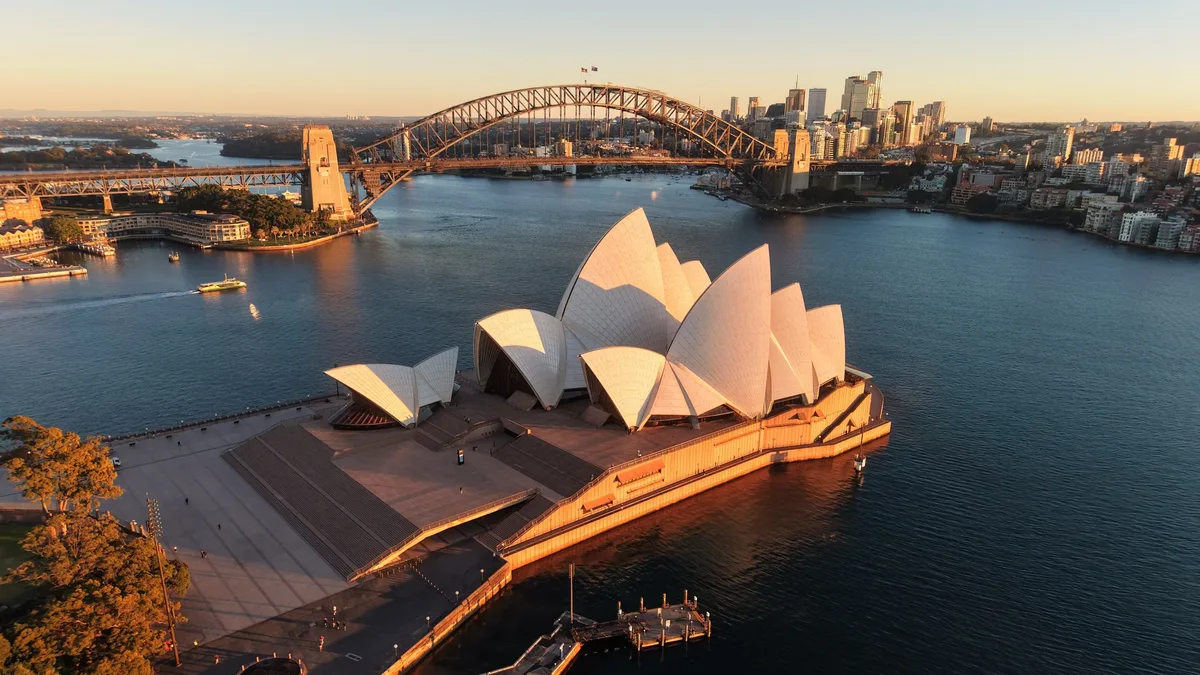
Hoi Hup buys Sydney hotel for A$202M
Singapore's Hoi Hup Realty has bought the Four Points by Sheraton Sydney hotel for A$201.8 million, entering Australia's commercial property market.