Unlicensed Developers And Agents
| Market type | Real estate development market |
|---|---|
| Yield | Varies by project and completion status |
| Foreign buyer status | Typically restricted |
| Regulatory oversight | Minimal or non-compliant |
| Transaction security | Low |
| Title certainty | Not guaranteed |
| Typical asset state | Off-plan or incomplete |
Origin and history
The term "Unlicensed Developers And Agents" does not originate from a specific country or region, nor does it have a documented creation date. It is a descriptive label that emerged organically within global real estate markets, particularly in developing economies experiencing rapid urbanization. Its common usage became widespread in the late 20th and early 21st centuries, coinciding with real estate booms in many parts of the world. The phenomenon is intrinsically linked to periods of high demand outpacing regulatory capacity and formal market supply. It represents a gray-market sector that exists parallel to the formal, regulated property industry. Historical precedents for such informal development and brokerage can be found in many cities throughout modern history during phases of intense migration and growth.
What it is for
This sector exists to provide property access and brokerage services where the formal market is inaccessible, too slow, or too expensive for a significant segment of the population. It serves buyers and tenants seeking lower entry costs, often in desirable but supply-constrained locations. Unlicensed developers typically build housing or commercial units without full planning permissions or on land with unclear title. Unlicensed agents facilitate the sale, rental, or lease of these properties, as well as sometimes legally ambiguous properties like agricultural land slated for future conversion. The sector also caters to investors or buyers whose profiles, such as a lack of formal income documentation, may not meet stringent bank or licensed agent requirements. Its primary function is to fill the gap between high regulatory standards and immediate market demand.
Overview
The market for transactions involving unlicensed developers and agents is substantial in many cities, particularly in regions with complex land ownership histories and bureaucratic hurdles. This market operates with minimal oversight, relying heavily on cash transactions and personal networks rather than transparent listing services. Yield potential can be significantly higher than in the formal market, reflecting a premium paid for perceived opportunity, but it also carries vastly higher risk. The entire transaction ecosystem, from title verification to contract enforcement, is informal and based on trust or local power structures rather than legal recourse. Foreign buyers are often explicitly targeted by unlicensed agents due to their perceived lack of local knowledge and greater financial resources. Navigating this market requires a completely different skillset and risk tolerance compared to the formal property sector.
What to know
Engaging with this market means operating outside the protections of national real estate regulatory bodies and standard contract law. Title deeds may be forged, disputed, or non-existent, and properties may be built in violation of zoning codes, leading to future demolition. There is no recourse to official commissions or insurance bonds if a deal fails or if fraud occurs. All financial due diligence falls entirely on the buyer, with no mandatory disclosure of defects, liens, or ownership history. Yield figures quoted by unlicensed agents are speculative and should be treated with extreme skepticism, as they rarely account for legal regularization costs or the risk of total loss. Foreign buyers must understand that local courts may offer little to no protection for transactions deemed illegal from the outset, and their home country's embassy will likely be unable to assist.
Common questions
A common question is whether a foreigner can legally buy property from an unlicensed developer or agent, to which the answer is that the legality of the purchase depends entirely on the underlying property's status, not the licensure of the intermediary. Foreigners often ask if the process is faster or cheaper, which it typically is upfront, but ignores the long-term risks and potential costs of legalization. Many inquire about the possibility of later legalizing an illegally built structure or unclear title, a process that can be prohibitively expensive, politically fraught, and ultimately unsuccessful. Buyers question how to verify an unlicensed agent's reputation, which usually relies on unverifiable personal testimonials and community standing rather than public records. People ask about financing, and must know that no reputable bank or mortgage lender will finance a purchase without clear title and approved plans. Finally, individuals wonder about the risk of eviction, which is a persistent and real threat that can materialize years after purchase.
Pros and cons
A genuine pro is access to locations and property types that are unavailable in the formal market, sometimes at a lower initial purchase price. Another is the speed of transaction, bypassing bureaucratic delays for permits and approvals. The primary and overwhelming con is the extreme risk of total financial loss with no legal recourse, as contracts may be unenforceable. A common mistake is being swayed by a significantly lower price or higher promised yield without budgeting for the high probability of additional payments for bribes, legal fights, or infrastructure. Many who regret choosing this path are foreigners who discovered, after purchase, that they cannot secure a building permit, connect to municipal utilities, or obtain residency permits based on their investment. What genuinely goes wrong includes the emergence of the true legal owner, government demolition orders, or the developer simply abandoning the project after collecting deposits.
Who it suits
This market suits only a very specific and risk-tolerant profile: individuals with deep local knowledge, including an understanding of community power dynamics and informal dispute resolution mechanisms. It may suit those who have access to non-judicial means of enforcing agreements and who can afford to lose the entire investment without severe financial hardship. It is not suitable for any buyer seeking security, legal protection, or financing. Foreign buyers are almost universally ill-suited for this market, lacking the necessary local context and leverage. The only possible exception would be a foreigner married into a powerful local family or with decades of residency and connections. For the vast majority of investors and homeowners, the formal, licensed market, despite its higher barriers to entry, is the only prudent choice.
Latest Unlicensed Developers And Agents news
Latest reporting
Miami Developers Sell Condos with Deeded Private Offices
A new real estate model in Miami pairs luxury condominiums with deeded private offices, turning a building amenity into a separate income-generating...
Mahoning Valley Offers Bargain Commercial Real Estate
Local agents report strong out-of-town investor interest in the Mahoning Valley's commercial real estate, driven by affordable prices, high demand for
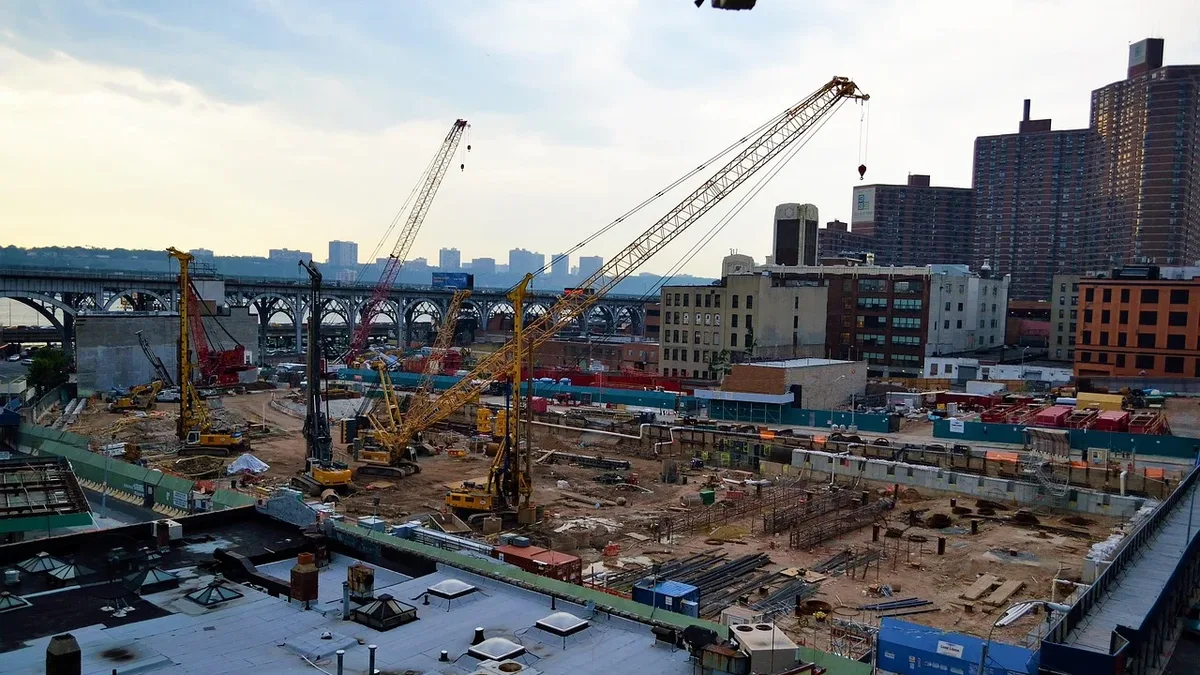
JD.com, Sino Land win HK$16.8B Northern Metropolis project
JD.com, Sino Land and four mainland developers secured a 50-year development grant for an 11-hectare site in Hong Kong’s Northern Metropolis, with a...