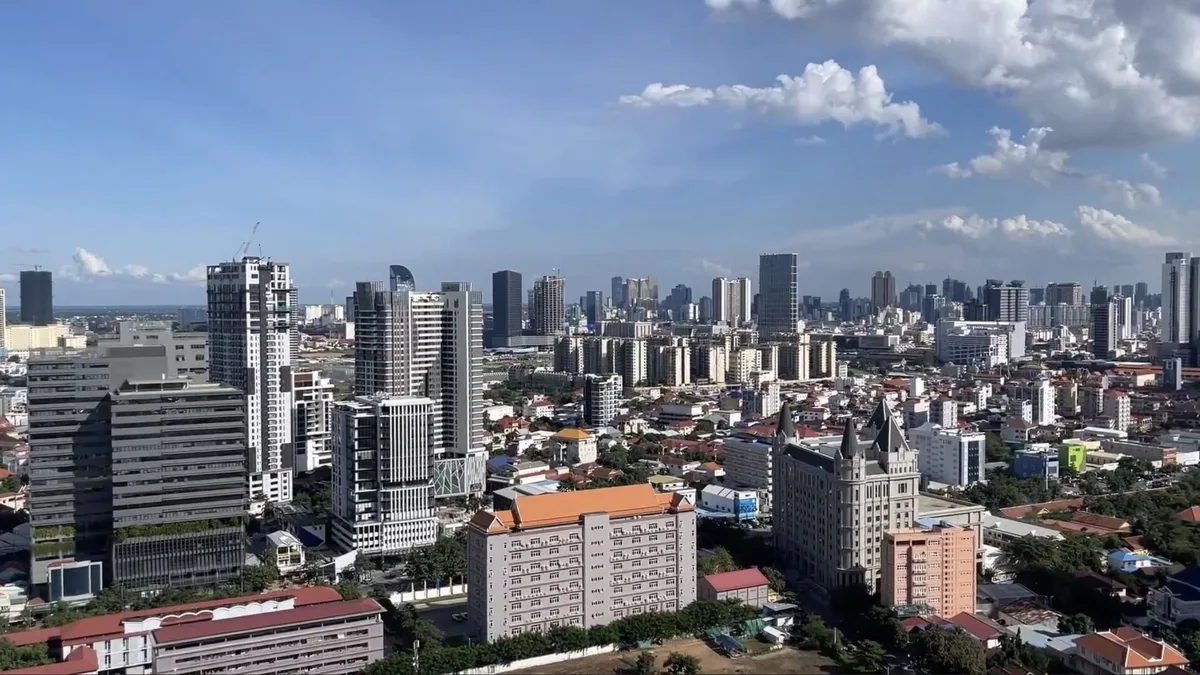
Phnom Penh And Sihanoukville
| City market | Real estate market |
|---|---|
| Yield | Varies by location and property type |
| Foreigner may buy | Yes, with ownership restrictions |
| Ownership restrictions | Condominium units above ground floor only |
| Land ownership | Not permitted for foreign individuals |
| Leasehold term for foreigners | Up to 50 years, renewable |
| Property types | Residential, commercial, industrial, agricultural |
Origin and history
Phnom Penh is the capital city of Cambodia, established as a permanent settlement in the 14th century after the abandonment of the Angkorian capitals. It became the national capital in the 1860s under King Norodom. Sihanoukville, also known as Kampong Som, is a coastal city in southwestern Cambodia. It was founded in the mid-20th century, with its modern port construction beginning in the 1950s under the rule of King Norodom Sihanouk, after whom the city is named. Both cities are central to modern Cambodian economic and urban development, with their growth trajectories shaped significantly by colonial and post-independence eras. Phnom Penh's history is marked by its role as a trading hub on the confluence of the Tonlé Sap, Mekong, and Bassac rivers. Sihanoukville's history is intrinsically linked to its strategic development as Cambodia's primary deep-water port.
What it is for
Phnom Penh serves as the national administrative, economic, and cultural center of Cambodia, housing government institutions, foreign embassies, and major financial entities. Its city market, in a broad sense, encompasses the commercial real estate and business landscape that facilitates trade, retail, and services for the capital region. Sihanoukville functions primarily as Cambodia's key maritime trade gateway, with its port handling the majority of the country's imports and exports. The city's market is heavily oriented towards logistics, port-related industries, and, in recent decades, tourism and real estate development. Both city markets are critical for domestic commerce and for attracting foreign investment into the country. Their purposes, while distinct, are complementary in driving national economic growth.
Overview
The property market in Phnom Penh is diverse, encompassing high-end commercial developments, condominiums, borey (gated community) houses, and traditional shophouses. Market yields for residential and commercial properties have historically been attractive by regional standards, though precise figures fluctuate with economic conditions. The Sihanoukville property market experienced a dramatic boom in the late 2010s, driven largely by Chinese-led investment in casino, tourism, and construction sectors, followed by a significant correction. Yields in Sihanoukville were highly volatile during this period, with coastal and central land prices reaching peaks before declining. Both markets operate within a legal framework that permits foreign ownership of certain types of property under specific conditions. The overall market dynamics are influenced by national economic policy, regional investment flows, and infrastructure development.
What to know
Foreigners are legally permitted to own property in Cambodia, but with important restrictions. They may hold full ownership of strata-titled units, such as condominiums, but only in buildings where at least 70% of the units are owned by Cambodian nationals. Foreigners cannot own land outright in their name; land ownership requires a Cambodian majority-owned legal entity or a long-term leasehold arrangement, typically up to 50 years with renewal options. Due diligence is critical, as land title disputes are not uncommon and the legal system can be complex for outsiders. Market yields are not standardized and require direct verification with local agents and recent comparables. The regulatory environment and market sentiment can change, influenced by government directives on sectors like online gambling, which profoundly impacted Sihanoukville. Engaging a reputable, licensed legal advisor is considered essential for any transaction.
Common questions
Can a foreigner buy a house with land in Cambodia? No, foreign individuals cannot hold freehold title to land; they must use a leasehold or a Cambodian-owned company structure. What is the typical yield for a Phnom Penh condo? Yields vary by location and property grade, but investors should obtain current figures from multiple agencies as historical highs have compressed. Is it safe to buy property in Sihanoukville now? The market carries specific risks following its boom-and-bust cycle, and thorough investigation into project completion, developer credibility, and existing infrastructure is mandatory. What type of title should I look for? Hard Title, issued by the national Land Management Ministry, is the strongest form of ownership evidence. Are there additional costs? Yes, transaction costs include transfer tax, registration fees, and agency commissions, which can total a significant percentage of the property value. How is the buying process different from Western countries? The process is less transparent, often relies on personal connections, and requires notarization and specific ministry approvals, making professional guidance non-optional.
Pros and cons
A primary pro of the Cambodian city property markets has been the potential for high rental yields compared to more mature regional markets, alongside a liberal foreign ownership regime for condominiums. Capital appreciation in prime areas of Phnom Penh has been a consistent trend over longer periods. A significant con is the pronounced market volatility and speculative nature, particularly evident in Sihanoukville, where investors faced steep losses after the speculative bubble burst. Legal complexity and opaque governance are major drawbacks, where unclear zoning, potential for title disputes, and sudden regulatory changes pose real risks. Many foreigners regret not conducting exhaustive due diligence, assuming processes mirror their home countries, or investing based on projected future infrastructure that fails to materialize. The common mistake is underestimating the importance of location-specific factors and over-leveraging based on optimistic, developer-provided yield projections.
Who it suits
The Phnom Penh market suits long-term investors with a moderate risk tolerance who seek exposure to Cambodia's capital city growth and who are willing to navigate bureaucratic processes. It is appropriate for those who prefer the relative stability of a diversified capital city economy over a single-industry town. The Sihanoukville market may suit only highly risk-tolerant, opportunistic investors with a deep local network and the capacity to conduct intensive on-ground verification. It is not suitable for passive investors or those reliant on stable, predictable returns. Both markets require investors who are physically present or have a trusted local representative to manage assets, as property management standards can be inconsistent. They are suited to individuals who have secured reliable legal counsel and understand that investment is not just financial but also an immersion into a complex administrative and cultural environment.